Thursday, December 5, 2024

Horizon Microtechnologies receives ESA funding

To advance micro 3D printing and metallization technology to meet the rigorous demands of space applications


Stay up to date with everything that is happening in the wonderful world of AM via our LinkedIn community.

Horizon Microtechnologies, a micro 3D printing company, has secured funding from the European Space Agency’s (ESA) SPARK program administered by the Center for Satellite Navigation Hesse GmbH, CESAH – fuelling the development of its advanced 3D printing and metallization technology to meet the rigorous demands of space applications. By developing components that can withstand the harsh, unserviceable conditions of space, Horizon is proving that its technology is mature enough to address these engineering challenges.

“Receiving ESA Spark funding is a powerful step forward for Horizon,” said Andreas Frölich, CEO of Horizon Microtechnologies. “Space applications demand the highest standards of performance, longevity, and reliability, and this support from ESA through CESAH is a testament to the potential we have to drive innovation in space technology.”

Horizon’s unique approach integrates the precision and design flexibility of 3D printing with advanced metallization processes. For space applications, this means lighter, more compact components that maintain structural integrity and functionality, even in extreme conditions. Weight reduction, or SWaP (Size, Weight, and Power), is a crucial factor in space missions, as every gram counts toward efficiency. With Horizon’s technology, components can be made lighter without sacrificing durability.

Additionally, Horizon’s technology supports the creation of monolithic components with complex geometries that would be difficult to achieve with traditional manufacturing techniques.

“This project does more than just position Horizon’s technology within the space sector, it also paves the way for broader industry adoption. Success in space – the most demanding of environments – provides a compelling proof-of-concept for sectors such as telecommunications, aerospace, and defense, where reliability and endurance are paramount. If Horizon’s components can thrive in space, they can certainly meet the high standards of terrestrial applications,” said Frölich. “Horizon Microtechnologies is thrilled to embark on this next phase of growth, backed by ESA Spark funding and inspired by the possibilities of space innovation. As the company continues to push the boundaries of what is possible with 3D printed, metalized components, we invite our partners, customers, and the wider technology community to join us on this exciting journey.”

Horizon Microtechnologies, ESA funding, European Space Agency, microtechnology innovation, advanced materials, space tech funding, ESA partnership, cutting-edge technology, microfabrication, research and development

#ScienceFather#InventionsAwards#HorizonMicrotechnologies #ESAFunding #SpaceInnovation #Microtechnology #SpaceTech #EuropeanSpaceAgency #R&D #TechFunding #InnovationInSpace #AdvancedMaterials


Event Title : International Inventions Awards

Event Website : Visit: inventionawards.org

Award Nomination Link - https://inventionawards.org/award-nomination/?ecategory=Awards&rcategory=Awardee
Award Registration Link - https://inventionawards.org/award-registration/
Member Nomination Link - https://inventionawards.org/member-submission/?ecategory=Membership&rcategory=Member
Member Registration Link - https://inventionawards.org/member-registration/
Award Winners Link - https://inventionawards.org/award-winners/


For Enquiries: contact@inventionawards.org


Get Connected Here
---------------------------------
---------------------------------

Social Media Links:

YouTube link : youtube.com/channel/UCEiGMaNVAzN2gdfeRad-NjA
Twitter link : x.com/Scitentist55046
Pinterest link : pinterest.com/scitentist/

Wednesday, December 4, 2024

Learn Quantum Physics More Easily With This Breakthrough Approach


Researchers focus on two-state systems as a promising approach for classroom teaching.

A team of physics educators from Italy, Hungary, Slovenia, and Germany is pioneering a new approach to teaching quantum physics in schools. Traditional classroom methods have typically emphasized the history and origins of quantum physics, which can often create challenges for learners.

The researchers, including physics education specialist Professor Philipp Bitzenbauer from Leipzig University, focus on qubits—two-state systems that are both the simplest and most crucial quantum systems, capable of describing many situations. Mastering the control and manipulation of these qubits is fundamental to advancing modern quantum technologies.

According to Bitzenbauer, until now there have been no empirical studies of the effectiveness of these approaches using two-state systems in developing conceptual understanding in learners. There is also a lack of scientific research on the specific advantages and disadvantages for learning of different teaching approaches based on two-state systems.

“Using the example of the quantum measurement process, one of the central problems of quantum physics, we show how to develop a survey method that can then be used in the field as part of intervention studies. Overall, teaching concepts that focus on two-state systems do indeed appear to be more conducive to learning than the traditional approach,” says the Leipzig-based physics education specialist, who is the first author of the paper.

The Case for Two-State Systems in Teaching Quantum Physics

Making two-state systems the starting point for understanding quantum physics has been the subject of much discussion in recent years. According to Bitzenbauer, this approach opens the door to modern quantum technologies, be it quantum cryptography or quantum computing. One of the aims of quantum cryptography is to make communication secure against eavesdropping. Quantum computers can be used to solve problems that even supercomputers can only solve after a very long time or not at all, such as breaking down large integers into prime factors.

“My team and I are working to make the ground-breaking potential of quantum technologies accessible to schoolchildren,” says Bitzenbauer. The American Physical Society (APS) has invited him to present the results of the project at the APS Global Physics Summit in Los Angeles in March 2025.

Bitzenbauer points out that 2025 will be the International Year of Quantum Science and Technology: the scientific community can look back on 100 years of quantum mechanics making world history. And it continues to do so today, albeit at a more advanced level. Scientists are talking about a second quantum revolution that will shape the new century in the same way that the first quantum revolution shaped the 20th century. “Today, the focus is on the transition from many-body systems to the control and manipulation of single electrons, single photons or, more generally, single degrees of freedom in a quantum system. The simplest and most important quantum system has only two degrees of freedom – the two-state system. And this is the starting point for teaching quantum physics in schools,” says the researcher.

Quantum Physics, Easy Learning, Breakthrough Methods, Quantum Mechanics Simplified, Learning Strategies, Physics Education, Science Breakthrough, Quantum Theory Explained, Educational Tools, Innovative Learning

#ScienceFather#InventionsAwards#QuantumPhysics#PhysicsMadeEasy#LearnQuantum#ScienceBreakthrough#InnovativeLearning#PhysicsEducation#QuantumMechanics#EasyLearning#STEMEducation#QuantumTheory


Event Title : International Inventions Awards

Event Website : Visit: inventionawards.org

Award Nomination Link - https://inventionawards.org/award-nomination/?ecategory=Awards&rcategory=Awardee
Award Registration Link - https://inventionawards.org/award-registration/
Member Nomination Link - https://inventionawards.org/member-submission/?ecategory=Membership&rcategory=Member
Member Registration Link - https://inventionawards.org/member-registration/
Award Winners Link - https://inventionawards.org/award-winners/


For Enquiries: contact@inventionawards.org


Get Connected Here
---------------------------------
---------------------------------

Social Media Links:

YouTube link : youtube.com/channel/UCEiGMaNVAzN2gdfeRad-NjA
Twitter link : x.com/Scitentist55046
Pinterest link : pinterest.com/scitentist/

Saturday, November 30, 2024

Neural Networks Enhance Quantum Error Correction


        Study: Learning high-accuracy error decoding for quantum processors.


The AlphaQubit decoder maintained its edge on simulated data with realistic noise, showcasing its ability to adapt to complex error distributions. Trained on both synthetic and experimental data, it represents a significant step forward in leveraging machine learning (ML) to overcome the limitations of traditional, human-designed algorithms in quantum error correction.

Related Work

Quantum computing has shown huge potential over recent years to transform various applications, whether that be in material science, machine learning, and optimization. However, these possibilities are dependant on overcoming the intrinsic error rates of physical quantum devices. Error correction, achieved through redundancy using logical qubits, is essential for fault-tolerant quantum computation.

The surface code stands out for its high error tolerance, making it a leading approach. Yet, decoding this code remains challenging due to real-world noise effects like cross-talk and leakage. Researchers have increasingly turned to ML techniques to tackle these issues, training neural networks to decode complex noise patterns.

Advancing the Field with AlphaQubit

AlphaQubit, a new recurrent-transformer-based neural network, demonstrated a significant improvement over previous decoders, including ML-based ones, particularly when decoding Sycamore’s surface code experiments. Its two-stage training process incorporated analog inputs, enhancing accuracy and scalability for larger code distances.

On simulated data, AlphaQubit outperformed traditional methods like matching with weighted path metric-correlated (MWPM-Corr), maintaining high accuracy under complex noise models. By achieving superior error suppression and scalability, the decoder sets a new benchmark for practical quantum error correction.

How AlphaQubit Works

AlphaQubit employs a neural network architecture specifically designed for surface code decoding under realistic hardware conditions. It uses stabilizer state representations to store syndrome history, enabling it to capture spatial and temporal information through convolutional layers and self-attention mechanisms.

To address limited experimental data, the team used a two-stage training approach. The model was pre-trained on synthetic data generated from a generic noise model and fine-tuned with real-world data from quantum devices. This method allowed the decoder to adapt to hardware-specific noise while maintaining state-of-the-art performance.

One innovation was the use of “soft” stabilizer measurements instead of binary inputs. By treating stabilizer measurements as probabilistic variables, the model could integrate richer data for more accurate error correction. This approach also involved a novel soft XOR mechanism to process detection events, further enhancing the decoder's performance.

The Pauli+ simulator, used to train AlphaQubit, mimics hardware noise such as cross-talk, leakage, and soft I/Q readouts. Training metrics included logical error rates (LER) and performance fitting across different code distances, ensuring the model’s scalability and reliability.

AlphaQubit’s results set a new benchmark for quantum error correction. It surpassed tensor-network decoders in error suppression, demonstrating excellent scalability and adaptability to larger code distances. Despite its impressive performance, challenges remain in data efficiency and throughput, signaling opportunities for further refinement.

Conclusion

To sum up, AlphaQubit, a neural network decoder, outperformed the best tensor-network decoders, setting a new benchmark in error suppression for surface codes. It showed excellent scalability and accuracy, even at large code distances, though challenges remain in data efficiency and throughput.

The decoder’s ability to generalize across rounds and code distances demonstrated its potential for fault-tolerant quantum computation. AlphaQubit highlighted the promise of ML in advancing practical quantum computing despite the need for further improvements.

Neural Networks, Quantum Computing, Error Correction, Quantum Error Correction, QEC, Artificial Intelligence, AI, Machine Learning, ML, Quantum Information, Quantum Algorithms, Quantum Noise, Quantum States, AI in Quantum Computing, Deep Learning


Event Title : International Inventions Awards

Event Website : Visit: inventionawards.org

Award Nomination Link - https://inventionawards.org/award-nomination/?ecategory=Awards&rcategory=Awardee
Award Registration Link - https://inventionawards.org/award-registration/
Member Nomination Link - https://inventionawards.org/member-submission/?ecategory=Membership&rcategory=Member
Member Registration Link - https://inventionawards.org/member-registration/
Award Winners Link - https://inventionawards.org/award-winners/


For Enquiries: contact@inventionawards.org


Get Connected Here
---------------------------------
---------------------------------

Social Media Links:

YouTube link : youtube.com/channel/UCEiGMaNVAzN2gdfeRad-NjA
Twitter link : x.com/Scitentist55046
Pinterest link : pinterest.com/scitentist/

Thursday, November 28, 2024

Like brain cells, kidney cells can form memories


Human embryonic kidney cells (seen in this false-color scanning electron micrograph) share some of the same molecular mechanisms as memory-forming neurons.


Kidney cells can make memories too. At least, in a molecular sense.

Neurons have historically been the cell most associated with memory. But far outside the brain, kidney cells can also store information and recognize patterns in a similar way to neurons, researchers report November 7 in Nature Communications.

“We’re not saying that this kind of memory helps you learn trigonometry or remember how to ride a bike or stores your childhood memories,” says Nikolay Kukushkin, a neuroscientist at New York University. “This research adds to the idea of memory; it doesn’t challenge the existing conceptions of memory in the brain.”


In experiments, the kidney cells showed signs of what’s called a “massed-space effect.” This well-known feature of how memory works in the brain facilitates storing information in small chunks over time, rather than a big chunk at once.

Outside the brain, cells of all types need to keep track of stuff. One way they do that is through a protein central to memory processing, called CREB. It, and other molecular components of memory, are found in neurons and nonneuronal cells. While the cells have similar parts, the researchers weren’t sure if the parts worked the same way.

In neurons, when a chemical signal passes through, the cell starts producing CREB. The protein then turns on more genes that further change the cell, kick-starting the molecular memory machine (SN: 2/3/04). Kukushkin and colleagues set out to determine whether CREB in nonneuronal cells responds to incoming signals the same way.

The researchers inserted an artificial gene into human embryonic kidney cells. This artificial gene largely matches the naturally occurring stretch of DNA that CREB activates by binding to it — a region the researchers call a memory gene. The inserted gene also included instructions for producing a glowing protein found in fireflies.

The team then watched the cells respond to artificial chemical pulses that mimic the signals that trigger the memory machinery in neurons. “Depending on how much light [the glowing protein] produces, we know how strongly that memory gene was turned on,” Kukushkin says.

Different timing patterns of pulses resulted in different responses. When the researchers applied four, three-minute chemical pulses separated by 10 minutes, the light 24 hours later was stronger than in cells where the researchers applied a “massed” pulse, a single 12-minute pulse.

“This [massed-spaced] effect has never been seen outside a brain, it’s always been thought as this property of neurons, of a brain, how memory is formed,” Kukushkin says. “But we propose that maybe if you give nonbrain cells complicated enough tasks, they will also be able to form a memory.”

Neuroscientist Ashok Hegde calls the study “interesting, because they are applying what’s generally considered a neuroscience principle sort of broadly to understand gene expression in nonneuronal cells.” But it’s unclear how generalizable the findings are to other kinds of cells, says Hegde, of Georgia College & State University in Milledgeville. Still, he says this research may someday help with the search for potential drugs to treat human disease, especially those where memory loss occurs.

Kukushkin agrees. The body can store information, he says, and that could be meaningful to someone’s health.

“Maybe we can think of cancer cells as having memories, and think about what they can learn from the pattern of chemotherapy,” Kukushkin says. “Maybe we need to consider not just how much drug we are giving a person, but what is the time pattern of that drug, just as we think about how to learn more efficiently.”

Kidney cells, memory formation, cellular memory, brain-kidney similarity, kidney function, organ memory, medical discovery, cellular behavior, scientific research, health innovation

#KidneyCells #CellularMemory #MedicalBreakthrough #OrganFunction #ScientificDiscovery #HealthInnovation #KidneyResearch #MemoryFormation #BiologyFacts #HealthcareAdvances

Event Title : International Inventions Awards

Event Website : Visit: inventionawards.org

Award Nomination Link - https://inventionawards.org/award-nomination/?ecategory=Awards&rcategory=Awardee
Award Registration Link - https://inventionawards.org/award-registration/
Member Nomination Link - https://inventionawards.org/member-submission/?ecategory=Membership&rcategory=Member
Member Registration Link - https://inventionawards.org/member-registration/
Award Winners Link - https://inventionawards.org/award-winners/


For Enquiries: contact@inventionawards.org


Get Connected Here
---------------------------------
---------------------------------

Social Media Links:

YouTube link : youtube.com/channel/UCEiGMaNVAzN2gdfeRad-NjA
Twitter link : x.com/Scitentist55046
Pinterest link : pinterest.com/scitentist/


Wednesday, November 27, 2024

Could Cannabis Be the Answer to ADHD? The Surprising Science


Exploring Cannabis for ADHD

Cannabis, including marijuana and products containing cannabinoids and/or THC—the primary psychoactive compound in weed—has been promoted as a remedy for a wide range of conditions, from anxiety and sleep disorders to epilepsy and cancer-related pain.

Dr. Jennie Ryan, a nursing researcher at Thomas Jefferson University, focuses on how cannabis affects symptoms of attention deficit hyperactivity disorder (ADHD). Current ADHD treatments often involve medications like Adderall and cognitive behavioral therapy, which, while effective, can have drawbacks. “Parents are interested in cannabidiol, which does not contain THC,” says Dr. Ryan. “But we don’t have the science yet to back recommendations.”

Reviewing the Evidence on Cannabis and ADHD

In a recent review paper, Dr. Ryan and her colleagues plumbed the scientific literature to compile evidence, which is generally suggestive of interactions between cannabis and ADHD. The researchers focused on how cannabis use affects ADHD symptoms. Furthermore, the human body produces its own cannabinoids – the endocannabinoid system – which led the researchers to wonder how might this endogenous system influence ADHD? They scrutinized clinical and preclinical findings, which together suggest that cannabis affects the endocannabinoid system in a variety of ways affecting attention, hyperactivity, and anxiety.

“A relationship is there,” Dr. Ryan says. However, the picture is complicated by the sheer variety of cannabis products used, the many types of endocannabinoids and their biological pathways, and the variability of ADHD presentation in people. Teasing all these factors apart, she says, “is super complicated.” In addition, cannabis researchers are hobbled by legal restrictions around marijuana.

Future Directions in Cannabis Studies

Co-author Brooke Worster, MD, who specializes in pain management and palliative care, says she suspected the published evidence would be sparse. When that was indeed what they found, “I wasn’t super surprised,” she says. “Still, it is shocking how many holes there are. We have a lot of work ahead.”


Cannabis, ADHD, medical marijuana, ADHD treatment, cannabis research, ADHD symptoms, mental health, alternative medicine, ADHD and cannabis, ADHD solutions, cannabinoids, THC, CBD, ADHD management, cannabis benefits.

#Cannabis #ADHD #MentalHealth #AlternativeMedicine #CannabisResearch #CBD #THC #ADHDTreatment #CannabisBenefits #BrainHealth #FocusAndAttention #Wellness #ADHDManagement


Event Title : International Inventions Awards

Event Website : Visit: inventionawards.org

Award Nomination Link - https://inventionawards.org/award-nomination/?ecategory=Awards&rcategory=Awardee
Award Registration Link - https://inventionawards.org/award-registration/
Member Nomination Link - https://inventionawards.org/member-submission/?ecategory=Membership&rcategory=Member
Member Registration Link - https://inventionawards.org/member-registration/
Award Winners Link - https://inventionawards.org/award-winners/


For Enquiries: contact@inventionawards.org


Get Connected Here
---------------------------------
---------------------------------

Social Media Links:

YouTube link : youtube.com/channel/UCEiGMaNVAzN2gdfeRad-NjA
Twitter link : x.com/Scitentist55046
Pinterest link : pinterest.com/scitentist/

Tuesday, November 19, 2024

New theory reveals the shape of a single photon


A new theory that explains how light and matter interact at the quantum level has enabled researchers to define for the first time the precise shape of a single photon.

The nature of this interaction leads to infinite possibilities for light to exist and propagate, or travel, through its surrounding environment. This limitless possibility, however, makes the interactions exceptionally hard to model, and is a challenge that quantum physicists have been working to address for several decades.

By grouping these possibilities into distinct sets, the Birmingham team were able to produce a model that describes not only the interactions between the photon and the emitter, but also how the energy from that interaction travels into the distant "far field."

At the same time, they were able to use their calculations to produce a visualization of the photon itself.

First author Dr. Benjamin Yuen, in the University's School of Physics, explained, "Our calculations enabled us to convert a seemingly insolvable problem into something that can be computed. And, almost as a bi-product of the model, we were able to produce this image of a photon, something that hasn't been seen before in physics."

The work is important because it opens up new avenues of research for quantum physicists and material science. By being able to precisely define how a photon interacts with matter and with other elements of its environment, scientists can design new nanophotonic technologies that could change the way we communicate securely, detect pathogens, or control chemical reactions at a molecular level, for example.

Co-author, Professor Angela Demetriadou, also at the University of Birmingham, said, "The geometry and optical properties of the environment has profound consequences for how photons are emitted, including defining the photons' shape, color, and even how likely it is to exist."

Dr. Benjamin Yuen, added, "This work helps us to increase our understanding of the energy exchange between light and matter, and secondly to better understand how light radiates into its nearby and distant surroundings. Lots of this information had previously been thought of as just 'noise'—but there's so much information within it that we can now make sense of, and make use of.

"By understanding this, we set the foundations to be able to engineer light-matter interactions for future applications, such as better sensors, improved photovoltaic energy cells, or quantum computing."

Single photon, Photon shape, Quantum optics, Quantum theory, Light particles, University of Birmingham, Quantum mechanics, Electromagnetic waves, Photonics, Quantum technology

#PhotonShape #QuantumOptics #QuantumPhysics #LightParticles #Photonics #QuantumMechanics #UniversityOfBirmingham #QuantumTechnology #PhysicsResearch #OpticalScience

Event Title : International Inventions Awards

Event Website : Visit: inventionawards.org

Award Nomination Link - https://inventionawards.org/award-nomination/?ecategory=Awards&rcategory=Awardee
Award Registration Link - https://inventionawards.org/award-registration/
Member Nomination Link - https://inventionawards.org/member-submission/?ecategory=Membership&rcategory=Member
Member Registration Link - https://inventionawards.org/member-registration/
Award Winners Link - https://inventionawards.org/award-winners/


For Enquiries: contact@inventionawards.org


Get Connected Here
---------------------------------
---------------------------------

Social Media Links:

YouTube link : youtube.com/channel/UCEiGMaNVAzN2gdfeRad-NjA
Twitter link : x.com/Scitentist55046
Pinterest link : pinterest.com/scitentist/

Sunday, November 10, 2024

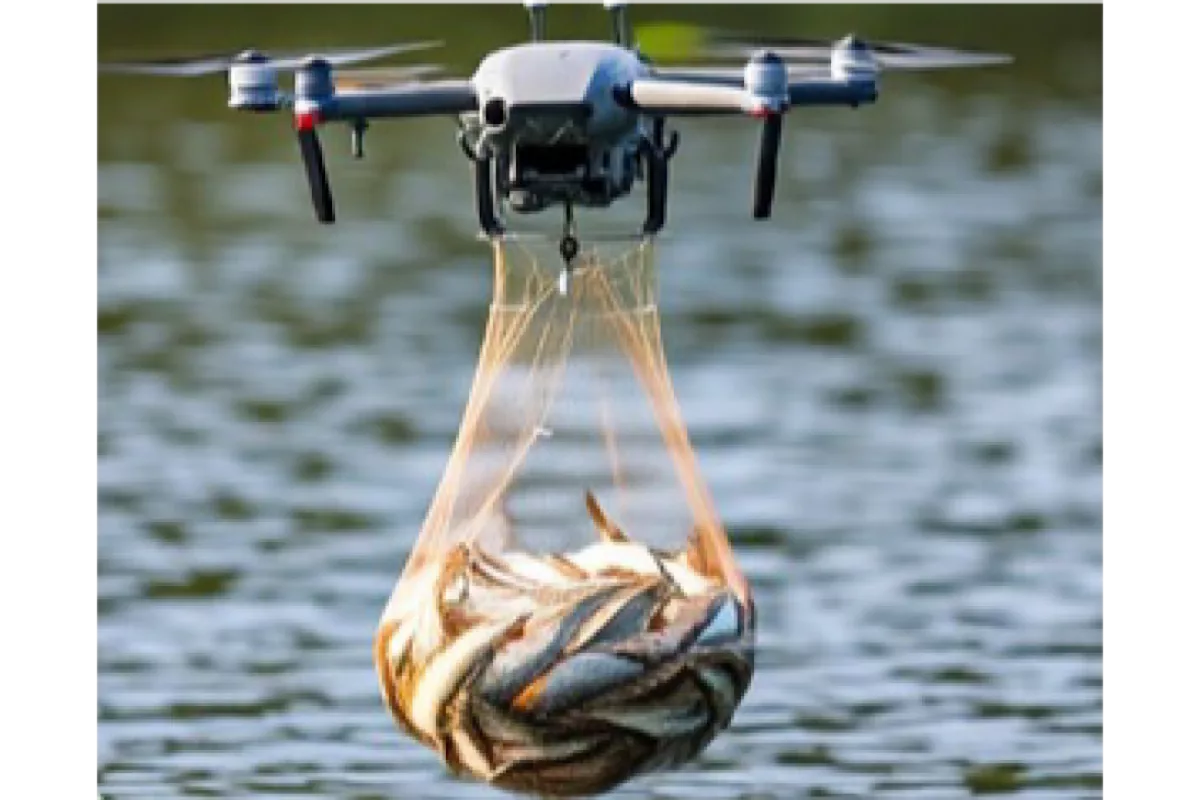
Centre to unveil drone technology for fisheries sector in Kochi


The Centre’s Department of Fisheries and the National Fisheries Development Board (NFDB), Hyderabad are organizing a workshop on the application and demonstration of drone technology in fisheries and aquaculture at ICAR-Central Marine Fisheries Research Institute (CMFRI) in Kerala’s Kochi on Friday.

The NFDB, along with innovative startups, will deliver a presentation highlighting the transformative potential of drone technology in the fisheries and aquaculture sector.

The event will conclude with a live drone demonstration on various Drone applications in fisheries like fish transportation, fish feed dispensing, and life jacket dispensing for rescue operations etc.

The workshop will offer a distinctive platform to highlight innovative technological advancements, focusing on the pivotal role of drone technology in transforming the fisheries sector and maximising its potential. It is expected that more than 700 fishermen and fisherwomen will participate in the event.

The initiative is part of the Prime Minister’s Matsya Sampada Yojana (PMMSY) which aims at fostering sustainable, economically viable and inclusive growth in the fisheries and aquaculture sector. Drones offer innovative solutions to a variety of challenges in the fisheries sector, with key applications in water sampling, disease detection, monitoring activities, feed management, and fish transportation. Additionally, drones support precision fishing and stock assessment.

The session will be preceded by the distribution of “Cadalmin BSF PRO,” a specially formulated fish feed designed to support sustainable aquaculture practices for fish farmers. In addition, a booklet, titled “EG Sailas Center of Excellence,” will also be launched, highlighting key advancements and contributions to the field.

Furthermore, the session will mark the official launch of the Marine Biological Association of India (MBAI) National Symposium, an event aimed at fostering collaboration and knowledge-sharing among marine science professionals across the nation.

The Department of Fisheries with technical support of DG Shipping, Ministry of Shipping, Ports and Waterways, is also organising a ‘One-Day Interactive Workshop on 8th November 2024 (9:30 AM) at Central Institute of Fisheries Nautical and Engineering Training (CIFNET), Kochi, to deliberate upon the issues of registration, survey, and certification of Fishing Vessels. The major objective of the workshop is to provide handholding support to the Department of Fisheries of the coastal State/UTs, to function as the ‘Registrar of Fishing Vessels’, and the required expertise to undertake the technical fitness assessment of the fishing vessels which is a prerequisite for the grant of registration or renewal of registration of fishing vessels.

Drone technology, fisheries sector, Kochi, unveiling, fisheries innovation, marine industry, drone applications, technology in fisheries, fisheries monitoring, drone for aquaculture, coastal management, fisheries technology


#ScienceFather#InventionsAwards#DroneTechnology #FisheriesSector #Kochi #MarineInnovation #Aquaculture #FisheriesMonitoring #CoastalManagement #TechForFisheries #DroneApplications #SustainableFishing #FisheriesTech #AquaticResearch


Event Title : International Inventions Awards

Event Website : Visit: inventionawards.org

Award Nomination Link - https://inventionawards.org/award-nomination/?ecategory=Awards&rcategory=Awardee
Award Registration Link - https://inventionawards.org/award-registration/
Member Nomination Link - https://inventionawards.org/member-submission/?ecategory=Membership&rcategory=Member
Member Registration Link - https://inventionawards.org/member-registration/
Award Winners Link - https://inventionawards.org/award-winners/


For Enquiries: contact@inventionawards.org


Get Connected Here
---------------------------------
---------------------------------

Social Media Links:

YouTube link : youtube.com/channel/UCEiGMaNVAzN2gdfeRad-NjA
Twitter link : x.com/Scitentist55046
Pinterest link : pinterest.com/scitentist/


Jiayi Li | Innovative Research Award#InternationalInvention #WorldResearchAwards

Jiayi Li is affiliated with Nanjing Forestry University and is associated with research in Environmental Science. The supplied bibliometric ...